Friday, December 30, 2016

How old are you and what do you want?

Elizabeth Strout’s work tells us how to establish a character’s age using something other than numbers.

When I was in writing school years ago, I had an experience I frequently recount, wherein Elizabeth Strout, the Pulitzer Prize–winning author of Olive Kitteridge, taught me more in a 10-minute workshop introduction than I had learned in all the many writing seminars and workshops I had had up to that day. In that 10 minutes, Strout imparted on us, among other things, the importance of positioning and authority, and the notion that we writers need to take our readers by the hand and gently but confidently lead them through our stories. I recalled that day again recently when Strout gave me a bit of advice on a piece of writing I’d long ago considered completed and buttoned up. After reading the Prologue to my unpublished first novel, wherein my protagonist and his wife are introduced to the reader, Strout told me I needed to “…let us know right away, or pretty soon, how old this man is, how old is wife is…without using numbers.” This would, she said, “be helpful in positioning the reader.”

No one who has studied with Strout will be surprised by that advice, and in fact my only surprise was that I needed it at all, because I really should have known better. But no matter, I was hugely grateful for the guidance, and so I set about filling in the gap. I just needed to figure out how, and that search led me to some discoveries I thought would interest my fellow writers. It was my wife Caroline who wisely suggested that I look at Strout’s own books to see how she addressed the problem, and so here, book by book, are the solutions I discovered: 


http://www.indiebound.org/book/9780375705199
As the title implies, this is the story of two women, a mother and a daughter. Strout is therefore able to use this relationship to tell how old both characters are in one swoop. After a lengthy description of Isabelle—which, of course, contains its own clues about her age—we get the simple phrase, “…her daughter, Amy, a girl of sixteen…” Obviously, Strout chooses to use a number here, but this is unobtrusive because of the character’s formative age and the fact that we are so well positioned in the lives of both characters with this one piece of solid information that we are easily able to retain that positioning throughout the story.


http://www.indiebound.org/book/9780812971828
The parent-child relationship is also key to establishing the age of the Reverend Tyler Caskey, the protagonist of Abide with Me. Strout accomplishes this gradually, just as she does with Isabelle, but the first clues come in the very first sentence: “Oh, it would be years ago now, but at one time a minister lived with his small daughter in a town up north near the Sabbanock River,…” Here we see that the age of the characters is just one element of positioning the reader, and that timing (“years ago now”) and setting (“a town up north”) are also important. We also see that working them in together is where the artistry comes in, that doing so with the right amount of grace and subtlety accomplishes a purely practical objective in a way that, again, takes the reader by the hand.


http://www.indiebound.org/book/9781400062089
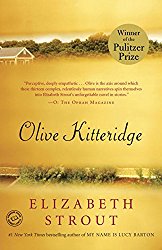
In this, Strout’s Pulitzer Prize winner, a book that has subsequently been made into an HBO mini-series produced by and starring Frances McDourmand, the reader is positioned at the beginning, but then must be repositioned many times as the book goes on. This is because Olive Kitteridge isn’t a novel in the pure sense, but rather a collection of stories and vignettes, all taking place at different points in the lives of the characters, Olive and Henry Kitteridge. In many cases, in fact, Olive and Henry are off to the side, observers.

http://a.co/gT9HHWjBecause Olive and Henry are old at the outset, Strout is able to use their stage of life to establish age, which she does, again, starting with the very first sentence. “For many years,” she writes, “Henry Kitteridge was a pharmacist in the next town over,…” Again weaving in setting and timeframe, she continues in the next sentence, “Retired now, he still wakes early and remembers how mornings used to be his favorite,…” Because Olive is married to Henry, the reader will naturally assume that she is of a similar age, and only needs to be informed otherwise if their ages are far apart, which they aren’t.

Having anchored the reader in one point in time, Strout moves on to other timeframes and new protagonists, always being careful to reposition the reader as needed.

Patty Howe, a protagonist in the second chapter, “Incoming Tide,” is first positioned by her occupation, a waitress in a coffee shop, and is then set as a young wife who has recently miscarried by her reaction to newly baked muffins: “The fact that their newly baked scent did not touch off a queasiness in her, as they had two times in the past year, made her sad: a soft dismalness settled over her.”

Angie O’Meara, the protagonist in the third chapter, “The Piano Player,” is set as a lounge singer of middle age at the end of the first paragraph, “…the townspeople of Crosby, Maine, had for many years now taken into their lives the cocktail music and presence of Angie O’Meara.”
And so on. The unique structure of Olive Kitteridge makes it a veritable object lesson in positioning the reader, and in establishing age without numbers.


http://www.indiebound.org/book/9780812979510
The protagonists of this story, the brothers Jim and Bob Burgess and their sister Susan, are introduced in an opening scene wherein an old woman gossips with her daughter about current and former residents of their town, Shirley Falls. The tenor of the scene suggests a distant past and characters—despite their being referred to as “the Burgess kids”—of a reasonably mature age. But it is the reference to their life experience, which, of course, foreshadows the dramatic events of the story to come, that sets them firmly in middle age: “The Burgess kids had a hold on her, I think,” says the daughter of the old woman, “as a result of the fact that all three had suffered publicly.”


http://www.indiebound.org/book/9780812979527
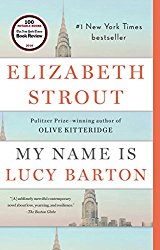
Positioning in this and all of Strout’s books is particularly important because her stories tend to wander widely to take in broad sweeps of time. This story is anchored in a 5-day period when the protagonist, Lucy Barton, was bedridden in the hospital and attended by her mother. As Lucy recalls this time, she remembers observing the world through her hospital room window: “I would stand and look out the window at the sidewalk below and watch the young women—my age—in their spring clothes,…” By mirroring Lucy against young professional women on a New York sidewalk, Strout firmly establishes her as a woman in her late twenties, and the reader is set in a firm position from which to experience the rest of the story, including Strout’s wanderings into distant places and timeframes.


And so, without revealing which approach I decided on—we’ll all have to wait for some visionary editor to finally buy my book for you to find that out—I can confidently say that a critically important and often unseen element in the best fiction is the very practical step of positioning the reader firmly in the story. So, whether you use relationships, stage of life, occupation, life experience, mirroring, or, as is typical and most effective, some combination of these devices, it is absolutely key that you establish the ages of your characters at the outset. Furthermore, the best writers know that simply using numbers to tell the reader, and then expecting them to remember that for the rest of the story, just isn’t enough. The timeframe, the setting, the antagonists and minor characters, and all the other elements of the story need to work together to reinforce who the characters are and, most importantly, what matters to them. Because readers won’t care about your characters until they know what the characters want, and we all want different things at different stages of our lives.

Thursday, September 29, 2016

After the Fact IV: The Fallacy of “Fair and Balanced”

A seemingly simple phrase and a great nation cast into a toxic void

Fox News always seems to be in the news. The latest revelation is that the network’s vice president of public-opinion research, Dana Blanton, has given Sean Hannity a very public smackdown for using bullshit polls to claim a Republican victory in the Sept. 26 Presidential Debate. This only weeks after the polling-related on-air dust-up between Fox personalities Dana Perino and Mafioso impersonator Eric Bolling, and of course, the even more recent fall from grace of the network’s former czar, the 76-year-old fat man Roger Ailes.

The Fall of the Fat Man
We all know now that Ailes is in fact a notorious perp, having got himself up there high and mighty enough to think he could command his attractive, female, (invariably blonde) on-air talent to (I can only assume put blinders on and) provide him with sexual favors. Fox paid $20 million to one accuser, Gretchen Carlson, and issued a formal public apology. And now coincidentally or as a result, who knows and who cares, one popular anchor has jumped ship, a slew of others who had voiced support for Ailes are falling over each other to retract, and an exposé in New York Magazine has led to a possible lawsuit by Media Matters, a web outlet that Bill O’Reilly likes to call a “hate site,” but is really just one of the few that consistently call out the vitriolic and corrosive combination of half-truth and single-data-point opinion with which Fox pollutes the airwaves.

That’s a mouthful, for sure, and while it tickles to imagine Ann Coulter sitting in the corner of a Fox green room muttering, “Hey, what about me?”, none of this is really what I want to talk about. Why? Because we’ve seen this movie before. Fox News is just one of many arch-conservative bunkhouses constructed by Rupert Murdoch’s News Corporation army, and we saw what happened when that army’s headquarters in the U.K. added to its already considerable rap sheet a sweeping set of phone hacking convictions that spanned more than a decade. Yes, that would be basically nothing. So we all know Fox will come out of this just dandy and will continue printing money for Murdoch and his boys, using the sweat and tears of working people the world over to grease the presses as it always has.

Misdirection and Menace

What I want to talk about instead is the Fox News tagline, “Fair and Balanced,” and the rhetorical misdirection and singular menace embedded within this phrase that, from the beginning, has been wielded by Ailes and Fox to make the network appear wholesome and professional when it is in fact doing the devil’s work. That work, and the extreme level of right-wing bias and supremely unfair and unbalanced Fox “reporting” is well-documented and doesn’t need rehashing. Just saunter on over to Wikipedia to find, in some level of detail, research studies and reports that empirically prove Fox's bias, internal memos and e-mail that show how that bias is driven down from executive desks to the on-air “correspondents,” and examples of deceptive photo and video manipulation by Fox producers.

Some of us haven’t forgotten how the covers were lifted off “Fair and Balanced” by Al Franken (now a U.S. Senator) in his 2003 book Lies and the Lying Liars Who Tell Them: A Fair and Balanced Look at the Right, and Robert Greenwald in the 2004 Brave New Films documentary “Outfoxed: Rupert Murdoch’s War on Journalism.” (The former, incidentally, led to a massive blunder by Fox, who decided to take on the venerable Franken in a copyright infringement suit that, despite the fact that Fox has successfully copyrighted “Fair and Balanced,” didn’t make it past the initial injunction. After the injunction to force the publisher to pull the book from circulation was summarily dismissed by U.S. District Court judge Denny Chin, Fox withdrew the suit. Chin called the injunction request "wholly without merit, both factually and legally," and later commented, "Of course, it is ironic that a media company that should be fighting for the First Amendment is trying to undermine it." At the end of the day, all the suit did was accelerate the release of Franken’s book and drive its sales through the roof.)

Origins of Historic Calamity

So the deceit inherent in “Fair and Balanced” is clear and well-documented, but menace? Yes, that’s a pretty strong word, but I think it applies, and here’s why. Fox entered the stage at a point in our history when 24-hour news networks were really getting down to the business of destroying the 4th estate. In the only profit-making industry that is guaranteed a right to exist by the U.S. Constitution, the delicate balance between truth-telling and money-making that had been painstakingly maintained for decades was immediately imperiled by 24-hour news. For me, the moment this became abundantly clear was the morning of the 9/11 attacks. I had just deplaned in Amsterdam that morning after a quick flight from Oslo and watched the coverage of the attacks on CNN in what was, in Holland, the early afternoon. This may be a controversial thing to say given the raw emotions that still surround the attacks, but I was appalled by CNN’s determination to deliver non-stop coverage despite the fact that they had absolutely no real, verifiable information to report. Here was Bernard Shaw standing before a camera on the roof of an adjacent building, spewing an endless string of wild speculation—the very thing we had been trained in journalism school not to do.

Onto this unmoored vessel of American broadcast journalism came Fox News, and thanks to the toxic combination of the 24-hour news format and Rupert Murdoch’s well-honed skill at finding embittered audiences—typically racists, misogynists, and xenophobes—and giving them what they want—something his tabloids throughout the Commonwealth had been doing for many years—that delicate balance between truth and profit is now a thing of the increasingly distant past. Fox has made no secret of the ratings war domination it has enjoyed pretty much since its inception, and its competitors have taken notice. As a result, profit-making is now king in broadcast journalism to such a degree that only the most indoctrinated and ambitious early-in-career practitioner can bring him- or herself to call it journalism at all. Whether it be the lies on Fox, the shoutfests on MSNBC, the comical virtual reality of CNN, or the C-suite celebrities on CNBC, broadcast news teams now seek to entertain us rather than inform or educate us, responding not to Fox’s lies, but instead to its unmatched ability to make money. So, Fox hasn’t destroyed the 4th estate by telling lies; it has done so by making lots of money doing it, and the tagline “Fair and Balanced” was the match to the fuel.

Dissecting “Fair and Balanced”

Breaking it down, the term fair is the mom-and-apple-pie word in the phrase: such an inarguable virtue—and, one would think, a foregone conclusion in news reporting—that even the least cynical among us automatically questions the fairness of anyone who feels the need to call themselves “fair” (just as we question a presidential candidate who, after bloviating his way through a childlike tantrum on a debate stage, declares that he has a “winning temperament”).

That said, it’s the second term, balanced, that does the real damage. It asserts that balance is in itself a virtue, expressed in Fox’s musical tagline as a parallel virtue to fairness, and wielded by Fox as a superior virtue to truth. And that’s where things get very nasty because the fact of the matter is, in the world of ideas, balance is not a virtue at all. A moment’s consideration transports us back to the 1930s and poses the question, what if Adolf Hitler’s ideas had never gotten access to the public consciousness of post–World War I Germany? A million eventualities would undoubtedly have flown forth in a Hitler-free Europe, and some of them might not have been good, but sparing humanity from the most senseless and brutal genocide in its long history most certainly would have counterbalanced the trains not running on time. And unfortunately, we don’t need to go back 70 or 50 or 30 years to find truly evil, horrible ideas. We’ve got plenty of them with us right here and now (many of them expressed with that aforementioned “winning temperament”).

The End of Integrity

I entered journalism school in 1979, a year before CNN introduced the 24-hour news format. In retrospect and without exhaustive study, it feels now like a pinnacle of journalistic integrity had been reached in those days, and there was nowhere to go but down. It had been just 11 years since Walter Cronkite had signed off of CBS News with a scathing, honest commentary on the Vietnam War, and just a few years since Woodward and Bernstein (and, perhaps more importantly, Ben Bradlee) had blown the covers off the Watergate scandal. In those days, we confidently accepted the idea that the news was somehow organically self-correcting: “The media is just a reflection of society,” we said. “The truth will rise.” And while we debated those ideas, and there were detractors, most of us rested assured that ours was a society that would always provide avenues to the truth for those who sought them, and that, as Martin Luther King said, “the arc of history bends towards justice.”

What we did not anticipate, though, was the toxic cloud of technology-fueled greed and political polarization that would descend on the country after the election of Ronald Reagan. We did not anticipate a world where an evil puppet master like Roger Ailes could enjoy impunity in the media landscape, and we certainly did not realize the depth of hatred that existed for the liberal ideas that had carried the day since the Great Depression. And we did not anticipate “Fair and Balanced,” a phrase that was not so much a tagline for a news channel as it was a commentary on the world that had existed before: The world of Edward R. Murrow and Walter Cronkite and Woodward and Bernstein, it said, was unfair and unbalanced, and needed to be corrected. And while I have no doubt Murdoch and Ailes are, in fact, people with no ideas, no solutions, no understanding, even, of the problems that face us, and that all of what they have done has been done in service to their own greed and that of their cohort in business and politics, we see now that their mantle has been seized by racist, misogynist, xenophobic patrons in a way that even they didn’t anticipate. And worse, now that their competitors in the 24-hour news game have joined Fox in its dirty work, putting profit over the people and the democracy they serve, American broadcast journalism has been utterly destroyed. In its place we now have the throbbing of a toxic void where the only way the truth can get through is to be rammed through on the decibels of a shrill voice, which, of course, reduces truth to an often inaudible wavelength in the constant din of noise.

You Can’t Smack What You Can’t See

I have no solutions for this, but I’m not without hope, because the fact is, the cockroaches are out in the open now, and while cockroaches rarely cede to a single swat, you can’t smack what you can’t see. With any luck, those in the political class who have been favored by Fox’s propaganda, those who have, in this strange election year, been forced to show their true cards, will fall prey to an electorate that will see the light and find its better angels. The fall of Roger Ailes and the coming rise of Barack Obama the writer, philanthropist, and social commentator—a period in his life and ours that could be even more impactful and beneficial to the republic than his remarkable eight years as our president have been—bolster my hope that the 4th estate will be transformed again, this time for the better.

Tuesday, April 19, 2016

Migrant Present, Migrant Past

Reflecting on mass movements of humanity, and how they have shaped who we are today.

Syrian Immigrants, Greece, 2016
In this year of unprecedented emigration from the Middle East to Europe, with a new EU/Turkey agreement sending desperate victims of senseless wars back to Turkish camps, with the Pope and other religious leaders issuing futile calls for compassion, and with hundreds of thousands of innocents being swindled by criminal traffickers, and many drowning in the Mediterranean, this is a time for all of us, and particularly those of us nestled safely in our homes in the United States, a land of immigrants, to reflect on the mass migrations of past decades and centuries that have shaped our republic and defined our culture, right to the present day.

Irish Immigrants, New York, Circa 1900
On my part, these reflections lead to Ireland. I've written in an earlier post about my Irish ancestor Bryan Carroll, who emigrated from County Meath, Ireland, and died in 1850 at the age of 45 in Upstate New York. Census data shows that Bryan emigrated before the unthinkable suffering and privation of the Potato Famine had descended on Ireland, a period when England surrendered to political and religious prejudice and abandoned the welfare of its Irish subjects, just as governments in the Middle East are doing to their citizens today. Nonetheless, Bryan was certainly part of the unprecedented migration that occurred over many years in the 19th and early 20th centuries, sending millions of Irish on long, perilous journeys to Northern England, Australia, and North America, where descendants like me live and thrive today.

The lessons of the Great Hunger and the Irish migration are beautifully chronicled in the 1999 book The Great Shame - and the Triumph of the Irish in the English-Speaking World by Thomas Keneally (author of Schindler's List). Within the tale of his own ancestor, Hugh Larkin, who was transported to Australia in the 1830s, Keneally paints a vivid picture of both the broad religious and political context that drove the Irish migration and the searing details of the potato blight itself and the disease and poverty it visited upon the Irish--effects that were hugely exacerbated by the indifference, and even disdain, of Parliament and the Crown. As 850,000 Irish were entering the port of New York between 1847 and 1851, still more were traveling to Canada, where government restrictions on emigrant ships were more lenient, and then making a barge-and-land journey south into the U.S. In early 1847, Congress passed new restrictions in an attempt to stem the tide, including higher minimum fares to New York and reductions in the maximum number of passengers per ship, actions that echo loudly in the actions of European governments today. But fortunately for Irish-Americans like me, these laws were largely futile, and as a result, Keneally writes, "the United Stated faced unprecedented challenges to public health and civic imagination." The strength of the human spirit won out in in the end, and few would claim today that the gifts brought to these shores by the Irish have been anything but expansive and enriching. As Keneally explains:
Irish navvies had made New York what it was by digging the Erie Canal, which turned the port into a great outlet for the produce of the Midwest. Now, entering into the New York Irish traditional trades of digging, cartage, saloon-keeping and politics, the refugees of the Famine would give it its cheap labor, augment its particular character and influence forever its politics.
The differences between the great Irish migration and the current emigration from the Middle East are at least as numerous as the similarities, but it is crucial to recall that many of the Irish were herded, frightened, and swindled just as Syrians, Libyans, Afghans, and Iraqis are today. And one startling fact suggests a preternatural connection that could well transcend these two historical movements of humanity: The first emigrant ship to land in Canada in the great migration year of 1847, it happens, was called the Syria.

Sunday, March 27, 2016

The Newsworthiness of Bernie Sanders


Ironically, the consistency of message that makes Bernie Sanders a great candidate for President of the United States could also be the biggest barrier to his actually getting there.

Bernie Sanders supporters like me are frustrated. We’re frustrated because we finally have a candidate who is passionately and consistently unabashed in his determination to lift the covers off of decades of lies and obfuscations, to expose a system that has decimated the middle class and left young people saddled with crushing student debt, to attack policies that have all but destroyed any hope America has of being competitive in the world—we finally have such a candidate, and yet the national media has chosen to ignore him. We know Senators Sanders’ message is based in truth, we know it is resonating, and we know there are thousands of us out here desperate to be heard beyond the encouraging Facebook posts we share with each other, but all we see on our TV screens and in our newspapers are a bunch of empty-suited Republicans bent on dragging America into a base-level politics where no one can thrive but a worm-eater.

The ultimate low came last week when all three major American news networks showed their viewers an empty podium even as Senator Sanders was delivering a speech to another of the throngs of thousands who have come out every time he has taken a stage.

I was therefore delighted today to see Reuters posting not one but two significant reports on Senator Sanders’ thrashing of Hillary Clinton in Saturday’s Democratic caucuses in Alaska, Washington, and Hawaii. Beyond just reporting on the horse race in the Democratic primary, Reuters even provided a reasonable synopsis of the Sanders message and how it has resonated:

[Sanders] has energized the party's liberal base and young voters with his calls to rein in Wall Street and fight income inequality, a message that resonated in liberal Washington and other Western states. Sanders won in Utah and Idaho this week.

So why is the media ignoring this guy? Recently, once I had finished pounding my fists at the injustice of this infuriating fact of the 2016 campaign, I found myself looking back, as I often do when the media is involved, to my years in journalism school. En route to the Journalism degree I earned in 1983, one of the foundational lessons we learned was around the concept of newsworthiness, the central question being, What makes a story newsworthy? That is, What makes one story more worthy of the air time or ink it will get than any of the other stories one could broadcast or publish? You can Google this now (“newsworthiness factors” were the terms I used), and you’ll come up with some combination of the lessons I was taught back in journalism school: Newsworthiness is based on factors like timeliness, proximity, significance, conflict, and human interest. Various practitioners use varying terms, but the general ideas are the same, and some of these factors appear on virtually every journalism teacher’s list. But the one that I always recall first—and, perhaps not coincidentally, the one that appears first on every list I found on Google—is timeliness.

So what is timeliness? I found this super succinct definition that I think captures it well:

News is what's new. An afternoon raid on a rock cocaine house may warrant a live report during the 6 p.m. news. However, tomorrow, unless there are major new developments, the same story will probably not be important enough to mention.

Some of you know where I’m going with this. How can the media’s penchant for timeliness work against a candidate who draws tens of thousands to his rallies every day? Well, that’s the problem. He draws huge, adoring crowds every day. Now, if suddenly a fight broke out in one of those crowds, boom, now you’ve got a story! Even more than that, though: Bernie Sanders is perhaps the most consistent politician in the history of our democracy in terms of the issues he has pursued and the message he has been promoting. He has been calling out corporate greed and a two-party system that shamelessly disenfranchises its own citizens ever since he was elected Mayor of Burlington, VT, in 1981. In a recent report, Rachel Maddow not only shows viewers the remarkable consistency of the Sanders message, she also shows how the national news media went to Burlington and sought out Mayor Sanders twice in the 1980s, when he was a relative unknown, and his message was therefore new and noteworthy.

https://www.youtube.com/watch?v=JXo5fe7dYWk
Without question, you can go down the various lists of newsworthiness factors and find others that should send the media in droves to tirelessly cover Senator Sanders. And that can and should drive a larger conversation about the performance of the American news media (shameful), and the question of whether the media is actually serving our democracy (it isn’t). But leave that for another post and just draw the obvious conclusion: If there’s any lesson we can take away from the 2016 campaign so far, it’s that timeliness is king, and the practical result of that is that American journalism is designed for little more than gimmickry, outrageousness, and extremes. Thoughtful critiques of what ails the nation and serious proposals for solving the nation’s problems have no place here, whether it be CNN, MSNBC, or the “channel” that shall not be named.

Sunday, December 20, 2015

You Are an Immigrant

Gravestone of Bryan Carroll,
My Great-Great-Great Grandfather
I know it's been said hundreds of times by hundreds of people, but that's not going to stop me...

This is the gravestone of my great-great-great grandfather Bryan Carroll, who emigrated, probably in the 1840s, from County Meath, in the Mid-East Region of Ireland. This gravestone was discovered this year in Upstate New York by family members, and will be repaired next year at our family's expense.

It is a wonderful discovery for our family, the insertion of one more piece into the complex puzzle of our shared history. But in 2015, 165 years after Bryan Carroll died at the age of 45 after what must have been a life of struggle, I am not reveling in this discovery as I should be. I am instead thinking about people in America today who continue to demonize citizens of the world like Bryan.

Bryan was a man who probably found himself in the midst of devastating circumstances beyond his control—in his case, the Great Hunger—which then led him to risk a perilous bid for the very survival of his family. Arriving in America, the Carrolls were probably persecuted for their faith, for their ethnicity, and for their poverty. These are all aspects of the immigrant experience that ring hauntingly true today, but what rises in my mind is the devious fact that all of those who would deny an immigrant his freedom today—all of them—have Bryan Carrolls in their family trees.

And yet, they never ask: What if someone had slammed the door on my family? What if someone had denied Mario Rubio or Rafael Cruz immigration from Cuba? What if someone had denied Mary Anne MacLeod, Donald Trump's mother, immigration from the Scottish Hebrides? What would America be today without these immigrants and the millions of others like them? Without the rich heritage they have woven into the American fabric? Without the hard work they and their descendants have put in to make America what it is today? And what would the world think of America had it denied its freedoms and its bounty to these desperate people? What would Irishmen left to starve in devastating famine think of those who denied them? What would Cubans left to suffer in Communist oppression think of those who denied them?

Fortunately, we'll never know the answers to these questions because we have opened our doors, we have woven a rich multi-ethnic national identity, and we have built a great nation and expanded and protected our freedoms, and we've done it all together.

To turn back the clock on this approach to the world—an approach grounded in generosity, an approach that is the very centerpiece, I believe, of American greatness—would be a betrayal of that very greatness and an admission of weakness and retreat.

I am thrilled that my family discovered Bryan Carroll's gravestone, and I'm anxious to learn as many details of his life as I can. But more than that, I am thrilled to be a citizen of the nation that has relieved the struggles of millions of immigrants like Bryan, and has set the foundation on which our family and the families of all American immigrants have been allowed to thrive.

Monday, December 14, 2015

My Turn as a Political Operative…

What Democrats need to do to start winning the political messaging wars.

Campaign Buttons, Mailer/Breslin Mayoral Campaign, 1969
In 1969, the author Norman Mailer ran for Mayor of New York under the infamous slogan, “No More Bullshit.” This is not only a hilarious fun fact, it is a stunning bit of history that sticks in the mind for one reason: political campaigns and operations in America are one of the least creative, most risk-averse species of messaging machine on the planet. Against that backdrop, “No More Bullshit” is a spectacularly courageous innovation. The one exception to this rule that I can think of has been the creation of a Republican Party propaganda arm (a.k.a. Fox News) that has somehow managed to convince millions of Americans that monkeys are flying out of their butts (or the equivalent thereof, anyway). As a liberal, I am frustrated daily by the ineptitude with which liberals respond, which now leads me to try some of my own ideas for political messaging out on you guys to see how they fare.

So what I’ll share here are what I think of as a couple of missed opportunities on the part of Democrats. One is outdated—waaaay after the fact—and one is quite recent. Where Jon Stewart and Trevor Noah deride the Democrats’ ineptitude, I offer suggestions, to wit…

1. Hillary – Don’t Generalize, Demonize

My first example is recent: I just saw this in my Facebook feed last week, posted by the Hillary Clinton campaign in response to the mass shooting in San Bernardino, California:


The issue here is subtle, but significant: Hillary Clinton, in pursuing her ultraliberal bona fides, has decided to take on the National Rifle Association. Key point here: She has decided to take on the entire NRA—an organization of 3 to 4 million members, depending on who you believe—with a series of social media posts and memes like this one. But one of the primary lessons Clinton should have learned by now from the success of the right wing propaganda machine is this one: Don’t generalize, demonize!

Did Fox News take on the entire documentary film industry, which they and their viewers certainly see as left-leaning? No, they demonized Michael Moore (who, incidentally, is an NRA member). Do they ever take on the entire Democratic Congressional Caucus? No, they demonize Nancy Pelosi! In other words, why take on the entire NRA when the vast majority of the organization’s vitriol, and in fact the very vehemence of its right-wing political posturing, emanates from a single monumental American asshole, Wayne LaPierre. The National Rifle Association actually began as a gun safety and education advocacy group that supported stricter gun control laws. It is an organization that has been hijacked by right wing fanatics like LaPierre and their evil financiers in the gun industry. I have to imagine that the organization has at least thousands, and perhaps tens or hundreds of thousands of members who disdain LaPierre’s incendiary and senseless rhetoric. Why lump these good people in with one of the biggest idiots in America? Why create more enemies?

My revision of the messaging would go something like this:


And it mustn’t stop there. Once the campaign is launched, each and every public statement Clinton makes about gun violence and the critical need for more reasonable gun laws should include prominent mention of LaPierre.
“These tragedies that are now occurring weekly in our towns and cities make it clear that the vast majority of Americans are right on this issue and Wayne LaPierre is wrong.”
“A lot of us have been trying to tackle this issue for years, but when Wayne LaPierre commands the amount of gun industry money that he does, it’s just impossible to get Republicans in Congress to do the right thing.”
“Wayne LaPierre has lied to you again [about guns in Israeli schools], and that shouldn’t surprise anyone. We know the vast majority of NRA members are law-abiding citizens who favor commonsense gun regulations, but unfortunately their mouthpiece is a right wing extremist who buys off Republicans with weapons industry money.”
See what I did there? A la the second meme above, I shifted the conversation to divide and conquer the NRA itself, an approach that has at least a fighting chance of succeeding, given the NRA’s history as a gun control and safety advocacy group.

And the key here is consistency, not just from Hillary, but from anyone on her staff who is authorized to speak to the media. There must never be a public statement made about gun violence without mention of Wayne LaPierre. He must become the face of the mass killer, so that when the next incident happens (and, tragically, it most certainly will), the first thing voters will think about is his ugly mug, his incendiary statements, and most importantly, his unconscionable position on gun control.

2. Mitch McConnell and the Boon that Never Was

Just before the 2010 mid-term elections, at a point where President Obama had not yet completed two years in office, U.S. Senate Majority Leader Mitch McConnell made this statement:

Senator Mitch McConnell
“The single most important thing we want to achieve is for President Obama to be a one-term president.”
Setting aside the potential extremes of a statement like that, made by a U.S. Senator from a southern state and directed at the first African-American president in U.S. history (and if you think that’s hyperbole, take a look at what happened to gun sales in the U.S. after each of President Obama’s elections, in 2008 and 2012), and setting aside the Republican Party’s abysmal failure in achieving its leader’s “single most important” goal, what McConnell actually did that day, by laying it out in stark terms the way he did, was present Democrats with the talking point of all talking points—a gift that, alas, they somehow managed to squander.

With the exception of a few statements made by Democratic Party leaders like Senator Dick Durbin and President Obama himself, not many others mentioned McConnell’s statement, and when they did the mentions were minor. What the Democrats should have done—in fact, what the memo sent to each and every Congressional Democrat and Democratic state governor should have read—was, each and every time they spoke to the media on any issue whatsoever, they should have led their comments with either direct or indirect mention of McConnell’s statement, to wit,
On the budget (state or federal): “Well, first off, we’re doing our best to work with an opposition whose sole objective is to prevent any progress from being made…”
On national security: “Given that our friends on the other side of the aisle have pledged themselves to the goal of obstructing any progress, I think we’re doing as well as we can…”
On gun control: “The Republican Party, which I think we can all refer to now as the Obstructionist Party, has committed itself to preventing any progress, but we’ll continue to work hard…”
On tax policy: “Our caucus continues to work very hard to find common ground with the Obstructionists, but they’ve been remarkably determined in their single stated goal of preventing any progress, so…”
See what I did there? I created a new term by replacing the term Republican Party with the term Obstructionist Party, which, after all, is exactly what Republicans have grown into over the past eight years. And even without the benefit of 20/20 hindsight, one could easily have seen, back in 2010 (and you don’t have to believe me, but I actually did), that McConnell had provided Democrats with the means of rightfully placing the blame for all government intransigence—no matter what the issue or crisis at hand—squarely at the feet of Republicans.

Yes, this is another old Fox News / Republican technique, “truth by assertion”—a.k.a., say something enough times, and people start to believe it. The Republicans’ most successful example of this was the replacement of the term rich people with the term job creators, which of course has no basis in fact. The difference with McConnell’s statement, though, is that it did have basis in fact: McConnell actually said the words, and the comment actually received reasonably wide media attention. It was in the public consciousness, just waiting there for Democrats to snatch it up. As distasteful as it might be for some to lower themselves by taking up devious rhetorical techniques like this, techniques embraced by Neanderthals like Rupert Murdoch and Roger Ailes, the fact of the matter is, the techniques work, and liberals in this country need to start speaking that language if any minds are ever going to be changed.

More importantly, liberals should see the clear difference between job creators and “make President Obama a one-term president,” which is that one is a complete lie and the other is a completely accurate quotation from one of the country’s most prominent Republican leaders. Using aggressive rhetorical techniques might tarnish one’s reputation slightly among the rest of the choir, but in the marketplace of ideas, doing so offers the chance to get the truth out there loudly, thereby getting it into the conversation. And the one thing the obscenely well-funded right wing propaganda machine has accomplished over the past decade is to dominate the conversation.