Showing posts with label Barack Obama. Show all posts

Thursday, July 20, 2017

Could Donald Trump Have Reunited the Republic?

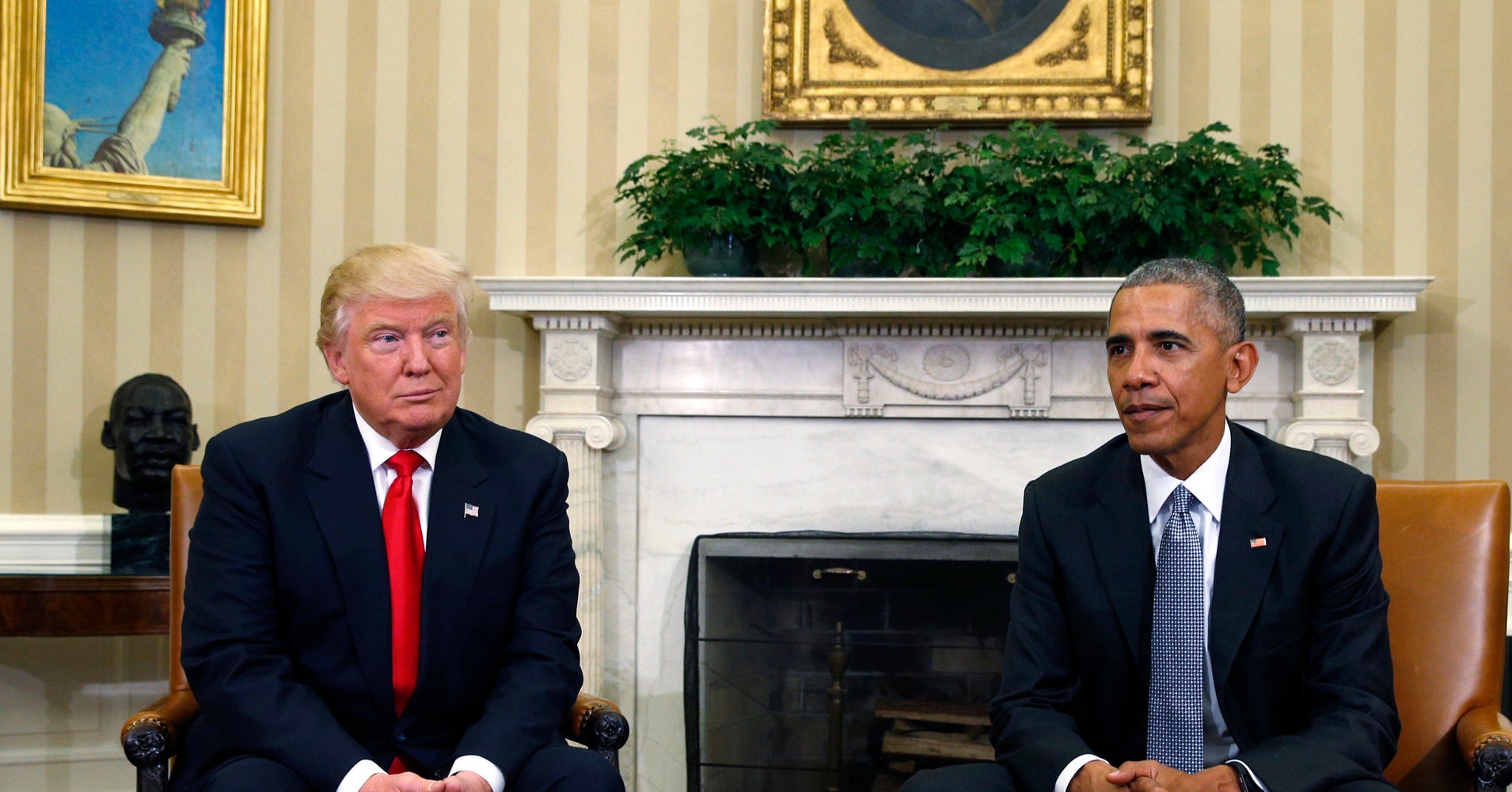
In December, two weeks before his inauguration as our 45th president, Donald Trump was briefed by U.S. Intelligence chiefs on conclusive evidence that Russian hackers had attempted to influence the U.S. Presidential election. The sitting president at the time, Barack Obama, had received a similar briefing, but there was very little Obama could do about it. He would be out of office in a matter of weeks, and it was his party's candidate, Hillary Clinton, who the Russian hackers had attempted to sabotage. Any action on Obama's part would have been futile, both practically and politically. Trump, on the other hand, as the newly elected President of the United States, had a choice to make that day—a choice that, despite the fact that no official or commentator has written or said much about it since, is worth considering. 


That choice, in fact, invokes another choice made by another presidential candidate some years prior: In November 2000, Vice President Al Gore conceded a hotly contested election to George W. Bush after having won the popular vote by more than half a million votes. When the Supreme Court halted a recount in Florida that might have given Gore the election, the sitting Vice President, in a remarkable act of grace and integrity, ceased all challenges and said that while he was deeply disappointed and sharply disagreed with the Supreme Court verdict, ”partisan rancor must now be put aside.” With all that has happened in the intervening years—9/11, two seemingly endless wars, the near collapse of the global economy, the election of our first black president, the rise of the Tea Party and with it a level of "partisan rancor" beyond anything either Gore or Bush could have imagined—Gore's concession has been all but forgotten. But in reality, it was a great act of patriotism that returned calm and order to Washington, and with it, the rest of the country.

Contrast this with the choice made by Donald Trump at an equally consequential time for the republic: After receiving his briefing, Trump at first did nothing. He dismissed the Intelligence chiefs and simply allowed the wheels of investigation, analysis, and essential justice to continue churning. In short order, of course, there was his pre-dawn, pre-adolescent Twitter-vomit impugning the Intelligence community's integrity, his Attorney General's bungling lies to Congress and eventual recusal, his firing of FBI Director James Comey, and ultimately, our current state: a special investigator appointed, a White House in turmoil, allegations and suspicion running rampant in Washington, and an entire federal government locked in stasis by the twin shackles of a disastrous Republican Congress and an even more disastrous Republican president.

But even with this bizarre new normal that has settled on Washington, it still behooves us, I think, to consider the question, What if Trump had made a different choice?  

What if he had decided that the prospect of Russians tampering in a U.S. presidential election was unacceptable and 
therefore must be thoroughly investigated and understood before the country could move on? What if he had requested a meeting with President Obama and called for a fast-track investigation into the Russian tampering, to be completed before he would take the mantle of the presidency? What if he had insisted that the federal government reduce or eliminate doubt and suspicion about the Russian tampering to a level acceptable to all parties before a transition of power could take place? 

He could have requested that President Obama remain in office—much as New York Mayor-Elect Mike Bloomberg did with Mayor Rudolph Giuliani in the wake of 9/11—until the fast-track investigation was completed. Obviously, this course of action would have required other changes, such as refusing to hire Michael Flynn the minute his ties to the Russians were uncovered, and firing Jeff Sessions the minute his Senate Confirmation hearing lie was revealed. But these actions would have only worked to Trump's advantage, leading men and women of integrity to relish the opportunity to serve in his administration, in stark contrast to the current state, where anyone with any qualifications whatsoever seems to be avoiding eye contact.

And, indeed, this is just one example of the changes in the country and the world we could have seen had Trump made a different choice. Both detractors and supporters would have admired his courage. Zealous supporters who criticized the move would have been immediately branded as overzealous. Intelligence agencies would have been on the spot to reach some level of conclusion quickly for the good of the country—which they would have done to the best of their abilities. And all parties would have been similarly compelled to cooperate with, if not collaborate in, the effort to reach a swift resolution.

But of course, one thing pretty much everyone will agree on—from the ardent Trump supporter to the Impeach Trump activist—is that what I'm suggesting here is completely absurd, bordering on the insane. The idea that Donald Trump, of all people, would have even the slightest understanding of both the gravity of the moment and the historical significance of the intelligence briefing he received is beyond imagining. A man who believes that the CIA Memorial Wall is the right place to crow on about the size of his inauguration crowd, that the dignity of the office does not preclude early morning adolescent tweetstorms, that U.S. foreign relations are a plaything, and on and on and on, is never going to demonstrate the grace and integrity needed to adroitly manage a pivotal presidential moment.

But imagining that a newly elected president would do such a thing isn't so insane, is it? Is it so crazy for us to expect grace and integrity from our nation's leader? This is one of many questions we Americans are now forced to ask ourselves in these tumultuous days, and while it is hugely frustrating that our expectations have slipped to such earthen-core depths, we must never let our imaginations falter. We must continue to imagine the best in our leaders, because this is only way we'll recognize the truly transformative leader when he or she arrives, and it's the only way we'll be able to keep our highest ideals alive.

Tuesday, March 28, 2017

“I Thought They Said Obamacare Was Evil”

Affirmation for the Affordable Care Act from an Unexpected Source

Republicans, predictably, have failed abysmally in their efforts to repeal and replace the Affordable Care Act, or Obamacare, and the usual media hand-wringing can be expected to go on for at least a few more days. The New York Times covers both the public and private sides of the inevitable blame game, Reuters focuses on the Great Dealmaker’s inability to close his first big deal as president, and the Guardian actually finds a possible bright side for the president at the other end of all this. But the media report I found most interesting was this Anderson Cooper interview with Ohio Governor and former presidential candidate John Kasich, which appeared a few days before the failure of the repeal effort.


Fast-forward to 3:50 in the video to hear Kasich say this:
“If Republicans jam this through…we will be right back where we were…before we started with Obamacare.”
Now, Kasich certainly engages, throughout this interview, in the wild intellectual gymnastics all Republicans engage in when criticizing the ACA. But in the end, here is a prominent Republican leader, a governor of a swing state, saying out loud that in the days before Obamacare, the country was worse off. That is, Obamacare has actually made things better for Americans.

This is just one Republican, perhaps unwittingly, making this statement out loud on national television, but the reality is, the entire American Health Care Act debacle perpetrated by the president, Speaker of the House Paul Ryan, and all of their fellow Republicans, whether it be the governors, the Freedom Caucus, or the Tuesday Group, has, more than anything else, served to solidly affirm the importance of the Obamacare law and the sweat, toil, and political mastery that were required to get it enacted in the first place. Here are three reasons why:
  1. Obamacare is a compromise. Despite the false narrative long pushed by Republicans that Obamacare was a shady deal negotiated in secret in back rooms, it was in fact a huge compromise. As moderate conservative thinker David Frum explains in a recent piece in the Atlantic, Obamacare constituted the “adoption of  ideas developed at the Heritage Foundation in the early 1990s and then enacted into state law in Massachusetts by Governor Mitt Romney.” Recall that President Obama and Democrats didn’t have to do this. They had the votes to pass a single-payer system of the kind Bernie Sanders still advocates, which would have been truer to liberal principles and in the end, I believe, much less expensive. But they knew there would be a huge political backlash, and that Republicans would be able to repeal and replace a single-payer law, probably with something that looked a lot like Obamacare, so they compromised.

  2. Obamacare is a success. An analysis by Margot Sanger-Katz in a February piece in the New York Times clearly details the fact that, despite mixed results overall for the ACA, it has had some remarkable successes that would have been unthinkable before Barack Obama became president. Millions of Americans now have health care coverage and are now more financially secure, health insurance overall is now more comprehensive, and both income inequality and the federal budget deficit have been reduced. And one must always remember that these successes occurred despite a constant drumbeat of invective, hyperbole, and irrational resistance to the law by Republicans nationwide. Tweaks are certainly needed to address weaknesses, but total repeal is no longer even important to most Americans, and that’s because the law has delivered on its most important promises.
     
  3. Obamacare has reframed the debate. As Sanger-Katz points out, “The Affordable Care Act has shifted the nation’s baseline expectations for how health care should work. Its successes have pushed Republican politicians, like Mr. Trump, into making expansive promises to provide insurance to all Americans.” And it’s not just government accountability that is discussed differently now; it’s health insurance and health provider services as well. As Sanger-Katz writes, “[Obamacare’s] failures have become focal points, too, leading to calls for lower insurance deductibles and for more choices in doctors and hospitals.” 

All of this indirectly led the president and Congressional Republicans to do something very strange over the past few weeks: after seven years of pledging to cheering crowds that they would totally repeal Obamacare immediately after taking power, they instead entered into a debate about how to modify the law: which provisions to keep and which to cast away, and what timing would be most advantageous politically. This tacit admission seems to have gone unnoticed, but that’s just what it was: a tacit admission that Obamacare had improved the lives of so many Americans, many of them Republicans, that it simply could not be repealed without massive political ramifications.

It’s hard to imagine in this weird aftermath of a bizarre, three-week Republican fire drill that the Obamacare law was debated in Congress for the better part of a year, that Republicans proposed dozens of amendments, many of which were accepted, and that many Democrats voted for the law despite serious misgivings. Even Sen. Tom Cotton of Arkansas, one of the more conservative Republicans in the Senate, has now admitted that the Democrats followed a more deliberative process in 2009 than the Republicans have with the AHCA. That’s called compromise, and it’s the necessary evil at the core of democratic governance.

As history judges this turbulent period in American politics, it could well be that Obamacare, whatever Republicans do in the coming months to try and push it over the cliff, just might go down as the last great legislative achievement of this democracy for a very long time.

Thursday, September 29, 2016

After the Fact IV: The Fallacy of “Fair and Balanced”

A seemingly simple phrase and a great nation cast into a toxic void

Fox News always seems to be in the news. The latest revelation is that the network’s vice president of public-opinion research, Dana Blanton, has given Sean Hannity a very public smackdown for using bullshit polls to claim a Republican victory in the Sept. 26 Presidential Debate. This only weeks after the polling-related on-air dust-up between Fox personalities Dana Perino and Mafioso impersonator Eric Bolling, and of course, the even more recent fall from grace of the network’s former czar, the 76-year-old fat man Roger Ailes.

The Fall of the Fat Man
We all know now that Ailes is in fact a notorious perp, having got himself up there high and mighty enough to think he could command his attractive, female, (invariably blonde) on-air talent to (I can only assume put blinders on and) provide him with sexual favors. Fox paid $20 million to one accuser, Gretchen Carlson, and issued a formal public apology. And now coincidentally or as a result, who knows and who cares, one popular anchor has jumped ship, a slew of others who had voiced support for Ailes are falling over each other to retract, and an exposé in New York Magazine has led to a possible lawsuit by Media Matters, a web outlet that Bill O’Reilly likes to call a “hate site,” but is really just one of the few that consistently call out the vitriolic and corrosive combination of half-truth and single-data-point opinion with which Fox pollutes the airwaves.

That’s a mouthful, for sure, and while it tickles to imagine Ann Coulter sitting in the corner of a Fox green room muttering, “Hey, what about me?”, none of this is really what I want to talk about. Why? Because we’ve seen this movie before. Fox News is just one of many arch-conservative bunkhouses constructed by Rupert Murdoch’s News Corporation army, and we saw what happened when that army’s headquarters in the U.K. added to its already considerable rap sheet a sweeping set of phone hacking convictions that spanned more than a decade. Yes, that would be basically nothing. So we all know Fox will come out of this just dandy and will continue printing money for Murdoch and his boys, using the sweat and tears of working people the world over to grease the presses as it always has.

Misdirection and Menace

What I want to talk about instead is the Fox News tagline, “Fair and Balanced,” and the rhetorical misdirection and singular menace embedded within this phrase that, from the beginning, has been wielded by Ailes and Fox to make the network appear wholesome and professional when it is in fact doing the devil’s work. That work, and the extreme level of right-wing bias and supremely unfair and unbalanced Fox “reporting” is well-documented and doesn’t need rehashing. Just saunter on over to Wikipedia to find, in some level of detail, research studies and reports that empirically prove Fox's bias, internal memos and e-mail that show how that bias is driven down from executive desks to the on-air “correspondents,” and examples of deceptive photo and video manipulation by Fox producers.

Some of us haven’t forgotten how the covers were lifted off “Fair and Balanced” by Al Franken (now a U.S. Senator) in his 2003 book Lies and the Lying Liars Who Tell Them: A Fair and Balanced Look at the Right, and Robert Greenwald in the 2004 Brave New Films documentary “Outfoxed: Rupert Murdoch’s War on Journalism.” (The former, incidentally, led to a massive blunder by Fox, who decided to take on the venerable Franken in a copyright infringement suit that, despite the fact that Fox has successfully copyrighted “Fair and Balanced,” didn’t make it past the initial injunction. After the injunction to force the publisher to pull the book from circulation was summarily dismissed by U.S. District Court judge Denny Chin, Fox withdrew the suit. Chin called the injunction request "wholly without merit, both factually and legally," and later commented, "Of course, it is ironic that a media company that should be fighting for the First Amendment is trying to undermine it." At the end of the day, all the suit did was accelerate the release of Franken’s book and drive its sales through the roof.)

Origins of Historic Calamity

So the deceit inherent in “Fair and Balanced” is clear and well-documented, but menace? Yes, that’s a pretty strong word, but I think it applies, and here’s why. Fox entered the stage at a point in our history when 24-hour news networks were really getting down to the business of destroying the 4th estate. In the only profit-making industry that is guaranteed a right to exist by the U.S. Constitution, the delicate balance between truth-telling and money-making that had been painstakingly maintained for decades was immediately imperiled by 24-hour news. For me, the moment this became abundantly clear was the morning of the 9/11 attacks. I had just deplaned in Amsterdam that morning after a quick flight from Oslo and watched the coverage of the attacks on CNN in what was, in Holland, the early afternoon. This may be a controversial thing to say given the raw emotions that still surround the attacks, but I was appalled by CNN’s determination to deliver non-stop coverage despite the fact that they had absolutely no real, verifiable information to report. Here was Bernard Shaw standing before a camera on the roof of an adjacent building, spewing an endless string of wild speculation—the very thing we had been trained in journalism school not to do.

Onto this unmoored vessel of American broadcast journalism came Fox News, and thanks to the toxic combination of the 24-hour news format and Rupert Murdoch’s well-honed skill at finding embittered audiences—typically racists, misogynists, and xenophobes—and giving them what they want—something his tabloids throughout the Commonwealth had been doing for many years—that delicate balance between truth and profit is now a thing of the increasingly distant past. Fox has made no secret of the ratings war domination it has enjoyed pretty much since its inception, and its competitors have taken notice. As a result, profit-making is now king in broadcast journalism to such a degree that only the most indoctrinated and ambitious early-in-career practitioner can bring him- or herself to call it journalism at all. Whether it be the lies on Fox, the shoutfests on MSNBC, the comical virtual reality of CNN, or the C-suite celebrities on CNBC, broadcast news teams now seek to entertain us rather than inform or educate us, responding not to Fox’s lies, but instead to its unmatched ability to make money. So, Fox hasn’t destroyed the 4th estate by telling lies; it has done so by making lots of money doing it, and the tagline “Fair and Balanced” was the match to the fuel.

Dissecting “Fair and Balanced”

Breaking it down, the term fair is the mom-and-apple-pie word in the phrase: such an inarguable virtue—and, one would think, a foregone conclusion in news reporting—that even the least cynical among us automatically questions the fairness of anyone who feels the need to call themselves “fair” (just as we question a presidential candidate who, after bloviating his way through a childlike tantrum on a debate stage, declares that he has a “winning temperament”).

That said, it’s the second term, balanced, that does the real damage. It asserts that balance is in itself a virtue, expressed in Fox’s musical tagline as a parallel virtue to fairness, and wielded by Fox as a superior virtue to truth. And that’s where things get very nasty because the fact of the matter is, in the world of ideas, balance is not a virtue at all. A moment’s consideration transports us back to the 1930s and poses the question, what if Adolf Hitler’s ideas had never gotten access to the public consciousness of post–World War I Germany? A million eventualities would undoubtedly have flown forth in a Hitler-free Europe, and some of them might not have been good, but sparing humanity from the most senseless and brutal genocide in its long history most certainly would have counterbalanced the trains not running on time. And unfortunately, we don’t need to go back 70 or 50 or 30 years to find truly evil, horrible ideas. We’ve got plenty of them with us right here and now (many of them expressed with that aforementioned “winning temperament”).

The End of Integrity

I entered journalism school in 1979, a year before CNN introduced the 24-hour news format. In retrospect and without exhaustive study, it feels now like a pinnacle of journalistic integrity had been reached in those days, and there was nowhere to go but down. It had been just 11 years since Walter Cronkite had signed off of CBS News with a scathing, honest commentary on the Vietnam War, and just a few years since Woodward and Bernstein (and, perhaps more importantly, Ben Bradlee) had blown the covers off the Watergate scandal. In those days, we confidently accepted the idea that the news was somehow organically self-correcting: “The media is just a reflection of society,” we said. “The truth will rise.” And while we debated those ideas, and there were detractors, most of us rested assured that ours was a society that would always provide avenues to the truth for those who sought them, and that, as Martin Luther King said, “the arc of history bends towards justice.”

What we did not anticipate, though, was the toxic cloud of technology-fueled greed and political polarization that would descend on the country after the election of Ronald Reagan. We did not anticipate a world where an evil puppet master like Roger Ailes could enjoy impunity in the media landscape, and we certainly did not realize the depth of hatred that existed for the liberal ideas that had carried the day since the Great Depression. And we did not anticipate “Fair and Balanced,” a phrase that was not so much a tagline for a news channel as it was a commentary on the world that had existed before: The world of Edward R. Murrow and Walter Cronkite and Woodward and Bernstein, it said, was unfair and unbalanced, and needed to be corrected. And while I have no doubt Murdoch and Ailes are, in fact, people with no ideas, no solutions, no understanding, even, of the problems that face us, and that all of what they have done has been done in service to their own greed and that of their cohort in business and politics, we see now that their mantle has been seized by racist, misogynist, xenophobic patrons in a way that even they didn’t anticipate. And worse, now that their competitors in the 24-hour news game have joined Fox in its dirty work, putting profit over the people and the democracy they serve, American broadcast journalism has been utterly destroyed. In its place we now have the throbbing of a toxic void where the only way the truth can get through is to be rammed through on the decibels of a shrill voice, which, of course, reduces truth to an often inaudible wavelength in the constant din of noise.

You Can’t Smack What You Can’t See

I have no solutions for this, but I’m not without hope, because the fact is, the cockroaches are out in the open now, and while cockroaches rarely cede to a single swat, you can’t smack what you can’t see. With any luck, those in the political class who have been favored by Fox’s propaganda, those who have, in this strange election year, been forced to show their true cards, will fall prey to an electorate that will see the light and find its better angels. The fall of Roger Ailes and the coming rise of Barack Obama the writer, philanthropist, and social commentator—a period in his life and ours that could be even more impactful and beneficial to the republic than his remarkable eight years as our president have been—bolster my hope that the 4th estate will be transformed again, this time for the better.
Monday, December 14, 2015

My Turn as a Political Operative…

What Democrats need to do to start winning the political messaging wars.

Campaign Buttons, Mailer/Breslin Mayoral Campaign, 1969
In 1969, the author Norman Mailer ran for Mayor of New York under the infamous slogan, “No More Bullshit.” This is not only a hilarious fun fact, it is a stunning bit of history that sticks in the mind for one reason: political campaigns and operations in America are one of the least creative, most risk-averse species of messaging machine on the planet. Against that backdrop, “No More Bullshit” is a spectacularly courageous innovation. The one exception to this rule that I can think of has been the creation of a Republican Party propaganda arm (a.k.a. Fox News) that has somehow managed to convince millions of Americans that monkeys are flying out of their butts (or the equivalent thereof, anyway). As a liberal, I am frustrated daily by the ineptitude with which liberals respond, which now leads me to try some of my own ideas for political messaging out on you guys to see how they fare.

So what I’ll share here are what I think of as a couple of missed opportunities on the part of Democrats. One is outdated—waaaay after the fact—and one is quite recent. Where Jon Stewart and Trevor Noah deride the Democrats’ ineptitude, I offer suggestions, to wit…

1. Hillary – Don’t Generalize, Demonize

My first example is recent: I just saw this in my Facebook feed last week, posted by the Hillary Clinton campaign in response to the mass shooting in San Bernardino, California:


The issue here is subtle, but significant: Hillary Clinton, in pursuing her ultraliberal bona fides, has decided to take on the National Rifle Association. Key point here: She has decided to take on the entire NRA—an organization of 3 to 4 million members, depending on who you believe—with a series of social media posts and memes like this one. But one of the primary lessons Clinton should have learned by now from the success of the right wing propaganda machine is this one: Don’t generalize, demonize!

Did Fox News take on the entire documentary film industry, which they and their viewers certainly see as left-leaning? No, they demonized Michael Moore (who, incidentally, is an NRA member). Do they ever take on the entire Democratic Congressional Caucus? No, they demonize Nancy Pelosi! In other words, why take on the entire NRA when the vast majority of the organization’s vitriol, and in fact the very vehemence of its right-wing political posturing, emanates from a single monumental American asshole, Wayne LaPierre. The National Rifle Association actually began as a gun safety and education advocacy group that supported stricter gun control laws. It is an organization that has been hijacked by right wing fanatics like LaPierre and their evil financiers in the gun industry. I have to imagine that the organization has at least thousands, and perhaps tens or hundreds of thousands of members who disdain LaPierre’s incendiary and senseless rhetoric. Why lump these good people in with one of the biggest idiots in America? Why create more enemies?

My revision of the messaging would go something like this:


And it mustn’t stop there. Once the campaign is launched, each and every public statement Clinton makes about gun violence and the critical need for more reasonable gun laws should include prominent mention of LaPierre.
“These tragedies that are now occurring weekly in our towns and cities make it clear that the vast majority of Americans are right on this issue and Wayne LaPierre is wrong.”
“A lot of us have been trying to tackle this issue for years, but when Wayne LaPierre commands the amount of gun industry money that he does, it’s just impossible to get Republicans in Congress to do the right thing.”
“Wayne LaPierre has lied to you again [about guns in Israeli schools], and that shouldn’t surprise anyone. We know the vast majority of NRA members are law-abiding citizens who favor commonsense gun regulations, but unfortunately their mouthpiece is a right wing extremist who buys off Republicans with weapons industry money.”
See what I did there? A la the second meme above, I shifted the conversation to divide and conquer the NRA itself, an approach that has at least a fighting chance of succeeding, given the NRA’s history as a gun control and safety advocacy group.

And the key here is consistency, not just from Hillary, but from anyone on her staff who is authorized to speak to the media. There must never be a public statement made about gun violence without mention of Wayne LaPierre. He must become the face of the mass killer, so that when the next incident happens (and, tragically, it most certainly will), the first thing voters will think about is his ugly mug, his incendiary statements, and most importantly, his unconscionable position on gun control.

2. Mitch McConnell and the Boon that Never Was

Just before the 2010 mid-term elections, at a point where President Obama had not yet completed two years in office, U.S. Senate Majority Leader Mitch McConnell made this statement:

Senator Mitch McConnell
“The single most important thing we want to achieve is for President Obama to be a one-term president.”
Setting aside the potential extremes of a statement like that, made by a U.S. Senator from a southern state and directed at the first African-American president in U.S. history (and if you think that’s hyperbole, take a look at what happened to gun sales in the U.S. after each of President Obama’s elections, in 2008 and 2012), and setting aside the Republican Party’s abysmal failure in achieving its leader’s “single most important” goal, what McConnell actually did that day, by laying it out in stark terms the way he did, was present Democrats with the talking point of all talking points—a gift that, alas, they somehow managed to squander.

With the exception of a few statements made by Democratic Party leaders like Senator Dick Durbin and President Obama himself, not many others mentioned McConnell’s statement, and when they did the mentions were minor. What the Democrats should have done—in fact, what the memo sent to each and every Congressional Democrat and Democratic state governor should have read—was, each and every time they spoke to the media on any issue whatsoever, they should have led their comments with either direct or indirect mention of McConnell’s statement, to wit,
On the budget (state or federal): “Well, first off, we’re doing our best to work with an opposition whose sole objective is to prevent any progress from being made…”
On national security: “Given that our friends on the other side of the aisle have pledged themselves to the goal of obstructing any progress, I think we’re doing as well as we can…”
On gun control: “The Republican Party, which I think we can all refer to now as the Obstructionist Party, has committed itself to preventing any progress, but we’ll continue to work hard…”
On tax policy: “Our caucus continues to work very hard to find common ground with the Obstructionists, but they’ve been remarkably determined in their single stated goal of preventing any progress, so…”
See what I did there? I created a new term by replacing the term Republican Party with the term Obstructionist Party, which, after all, is exactly what Republicans have grown into over the past eight years. And even without the benefit of 20/20 hindsight, one could easily have seen, back in 2010 (and you don’t have to believe me, but I actually did), that McConnell had provided Democrats with the means of rightfully placing the blame for all government intransigence—no matter what the issue or crisis at hand—squarely at the feet of Republicans.

Yes, this is another old Fox News / Republican technique, “truth by assertion”—a.k.a., say something enough times, and people start to believe it. The Republicans’ most successful example of this was the replacement of the term rich people with the term job creators, which of course has no basis in fact. The difference with McConnell’s statement, though, is that it did have basis in fact: McConnell actually said the words, and the comment actually received reasonably wide media attention. It was in the public consciousness, just waiting there for Democrats to snatch it up. As distasteful as it might be for some to lower themselves by taking up devious rhetorical techniques like this, techniques embraced by Neanderthals like Rupert Murdoch and Roger Ailes, the fact of the matter is, the techniques work, and liberals in this country need to start speaking that language if any minds are ever going to be changed.

More importantly, liberals should see the clear difference between job creators and “make President Obama a one-term president,” which is that one is a complete lie and the other is a completely accurate quotation from one of the country’s most prominent Republican leaders. Using aggressive rhetorical techniques might tarnish one’s reputation slightly among the rest of the choir, but in the marketplace of ideas, doing so offers the chance to get the truth out there loudly, thereby getting it into the conversation. And the one thing the obscenely well-funded right wing propaganda machine has accomplished over the past decade is to dominate the conversation.

Thursday, November 28, 2013

After the Fact III: The Government Shutdown

Reflections on a national disgrace and the man and his party who started it all.

By now, we all know that the Tea Party Republican Federal Government Shutdown™ was a national disgrace. From Sikkim to St. Petersburg to Sao Paulo, citizens the world over are still shaking their heads or shaking their fists at our right wing's inconceivable capacity for waste and stupidity.

Republicans, of course, were elated:
  • Rep. Michele Bachmann (R-MN):  "We're very excited. It's exactly what we wanted, and we got it. People will be very grateful."
  • Rep. John Culberson (R-TX): "It's wonderful. We're 100 percent united!"
But of course, the carnage they wrought brought anything but smiles across America. On top of the 800,000 federal workers who suffered through the first half of October without a paycheck, the impacts on air travel, imports and exports, small businesses, national parks, and America's reputation across the globe are now well-documented. Ironically, the overall price tag of $24 billion according to Standard & Poor's will now be paid by the same U.S. taxpayers the Tea Party professes to represent with its unique brand of vehement ignorance.

But to me, one of the most disturbing details of this dark chapter revolves around the man CNN dubbed the "Architect of the Shutdown," Congressman Mark Meadows (R-NC), who apparently circulated the letter that, once signed by a host of Republicans in Congress, left them beholden to the folly of the shutdown no matter what the costs. Explaining why he would jeopardize his party and the country in such a reckless manner, Meadows said:
"My job first is to make sure I represent the people back home. I don't believe that when I get here that people expect me to look at the political implications. That's for somebody else to focus on."
But in fact, as a member of the United States Congress, there are matters much more important than "political implications" for Congressman Meadows and his Tea Party compatriots to focus on. He is now a national leader (as terrifying as that may seem), and a national leader must look at all these issues through a national prism. His votes, his commitments, his party, even his inane floor speeches, all have national implications, implications well beyond the gentle slopes of western North Carolina, implications in Brooklyn and Compton and Fargo, North Dakota and Jackson, Mississippi. If Mark Meadows wants to represent the people back home, he really ought to do us all a favor and go run for mayor of Morgantown, where the most damage he can do would be slicing his thumb open while cutting a ribbon.

If any more evidence were needed that the Tea Party is not fit to make decisions with national and international implications, last month's government shutdown shows us that Mark Meadows stands as Exhibit A in an open-and-shut case.

Thursday, August 21, 2008

After the Fact I – The New Yorker Cover

Random thoughts on topics that have long since been flushed from the news cycles.

It’s just over one month since the flap ignited over the July 21 New Yorker magazine cover that depicted Barack Obama as a Bin Laden–worshipping Muslim and his wife Michelle as an AK-47–toting Al Quaeda insurgent. Admittedly, this is old news, but that’s what “After the Fact” is all about: I get to ruminate on something for weeks before positing an opinion. (Pssst. If you start your own blog, you can do the same thing!)

When I think about the flap over the cover, I get a little pissed off, as I’m sure a lot of living, breathing, thinking people out there do. But as I have thought about this, anger has evolved into its more rational antecedent, regret, and I have found myself distracted by two regrets in particular.

The first—and this is probably obvious—is that the flap occurred at all. I regret that because I first heard about the cover on the radio—long before I had actually received my copy of the New Yorker, seen the cover for myself, and experienced a reaction that would have been pure, unfettered, and uninfluenced by the likes of PBS reporters, talk radio hosts and callers, and above all, cable news “correspondents.” Now all I can do is claim to have found the cover hard-hitting, but in no way offensive; to have been amused by it in the same way NPR commentator Daniel Schorr was, according to his comments on the July 19th Weekend Edition program:

I saw it, my wife saw it, we looked at it and we thought, wo, that’s quite a parody on conservative views of Obama and his wife and all the rest of it…and we thought it was alright as satire, if you will, and then we began hearing things on cable television and all over and all of a sudden there were people up in arms over it…
Schorr goes on to say, “I guess what it shows is that we are in a state where you can’t afford to use satire because people will take you literally and get mad.” And, unfortunately, if that anger (or, one might say, stupidity) gets spread in the media, independent thought becomes the casualty. So I don’t know whether I’m responding to the cover or the flap over it, but in the end I couldn’t be more delighted that someone finally struck hard at the “Obama/Osama” idiocy that has all-too-easily found a toehold in the national discourse. I mean, sometimes you just have to stop coddling the stupid people—people like Ivan Stickles, a carpenter from Hopewell, PA, who was quoted in today’s national edition of the New York Times. Stickles referred to false rumors that Barack Obama did not shake hands with U.S. troops on his recent trip to Afghanistan:

“There’s this e-mail that he [Obama] didn’t shake hands with the troops,” Mr. Stickles said of the false rumor. “I don’t have time to check out if it’s true, but if it is, it’s very offensive.”
Stickles was interviewed in his driveway, where he’d been working on his motorcycle. Apparently the motorcycle and the spam e-mail he gets are more important to him than pesky little irritations like truth and accuracy.

That same Times article quoted another rank-and-file Pennsylvanian, George Timko, who illustrates my second regret about the New Yorker cover:
Mr. Timko is a burly fellow, with close-cropped white hair and a Fu Manchu mustache, and a gold necklace that rests on his bare chest. “Barack Obama makes me nervous,” said Mr. Timko, a 65-year-old retiree with a garden hose in hand. “Who is he? Where’d he come from?”
Now Timko may not be the kind of voter who would normally read the New Yorker (to say nothing of the two detailed autobiographies Obama has written), but if he had picked up the July 21 issue and looked beyond the cover, his questions would have been answered. Because while the media was burning news cycles talking every which way about the cover, another much more important Obama-related feature, Ryan Lizza’s article “Making It – How Chicago shaped Obama,” was going largely unnoticed. The article, a thoroughly researched and masterfully written account of how Obama crafted his unlikely and meteoric rise through the Chicago political machine, paints for Timko (and anyone else who isn’t too busy working on his motorcycle to read) a riveting picture of a young, ambitious community organizer who expertly and carefully created an image—in fact, some might say, a brand—that catapulted him not only into the Illinois State Senate, but also into the United States Senate, and if all goes according to plan, into the White House. It’s a top-flight piece of journalism in an era when the entire profession is in tatters. So because we were so all-fired paranoid about possibly offending people who are too stupid to see satire as satire, a real account with real information and real insight into the man Barack Obama has become, insight that can help us make informed choices about how to cast our votes, passed by with nary a whisper. (It’s still there, though, so take a hint: click here and read it.)

Wednesday, June 18, 2008

Halcyon Days in California...but Whither Obama?

I'm kind of a pussy. In fact, it's not all that unusual to find me in tears in front of a soft drink commercial. So you can imagine what these past two days have been like, with dozens of touching and triumphant stories like this one (MP3 download) streaming out of my car radio. As same-sex couples in California enter into legal marriages by the thousands, even straight, married, almost-middle-aged white guys like me are feeling the joy.

But in these halcyon days, when Californians are crashing through a historic civil rights barricade and neglected generations of Americans are finally enjoying the rights, privileges, and responsibilities of community-sanctioned marriages, the question I find myself asking is, "Where is Barack Obama?" A pivotal moment in American political history, with national and perhaps international significance, occurring in Northern California, the place that powered Obama's meteoric rise, and the nominee has yet to comment? It's a head-scratcher.

Gavin Newsom, San Francisco's defiantly progressive mayor (and, in my optimistic opinion, a future President of the United States), seems to agree. Shortly after officiating at the historic wedding of Phyllis Lyon, 83, and Del Martin, 87, Newsom commented on Obama's conspicuous absence. Noting that California Governor Arnold Schwarzenegger has opposed a state constitutional amendment that would once again ban same-sex marriage, and that Obama has so far been mute on the subject, Newsom said, "Contrast that, a Republican governor of California coming out against it, and then a Democratic nominee for president not sure, that's not a great sign." Public radio correspondent Scott Shafer, who filed the report, said that "Newsom, who originally supported Hillary Clinton, has endorsed Obama, but he says unless Obama comes out strongly against the [constitutional amendment], he'll wonder about the Illinois senator's authenticity as a new kind of leader."

Looking more closely at Obama's long-held and consistently stated position on the issue, you can almost see why he would stay away from California right now. According to the Pew Forum on Religion in Political Life, Obama's position on same-sex marriage can be encapsulated as follows:

Obama says that he personally believes that "marriage is between a man and a woman" but also says that "equality is a moral imperative" for gay and lesbian Americans. He advocates the complete repeal of the Defense of Marriage Act (DOMA) because "federal law should not discriminate in any way against gay and lesbian couples, which is precisely what DOMA does." He supports granting civil unions for gay couples, and in 2006 he opposed a constitutional amendment to ban gay marriage. In March 2007, Obama initially avoided answering questions about a controversial statement by a U.S. general that "homosexual acts" are "immoral," but Obama later told CNN's Larry King, "I don't think that homosexuals are immoral any more than I think heterosexuals are immoral."

But if he opposes a same-sex marriage amendment to the U.S. Constitution, why not the constitution of the most populous state in the union? What's more, there's a train going down the tracks here, and Obama isn't exactly sitting in the dining car. He may be trying to keep a firm grip on the handrail in the vestibule, but for me, that's just a downright dirty shame. And it's a shame not because I think it will cost him votes (in fact, regrettably, it will probably preserve him some), or because it tarnishes his standing as a true progressive, but because I think he's wrong on this one. And I think history will prove that out as the millenial generation grows into a powerful voting bloc and the battle for gay and lesbian rights becomes the latest long-deserved victory in America's ongoing human rights struggle.