Showing posts with label fiction. Show all posts

Thursday, January 26, 2017

Craft and Inspiration – First Installment

Dispatches from Poets & Writers Live San Francisco, January 2017, Part 1

Ah, the writing conference. Communing over coffee and tea with writers I’ll never see or speak to again, soaring to the words of a keynote speaker who rises above the craft to spark our creative souls, gravitating between surprise and monotony during the “practical” discussions as I hear things I’ve never heard before and things I’ve heard a million times, struggling to conjure just the right opening gambit for the editor, publisher, or agent in the expo or breakout, battling through petrified emotions to give myself that one fleeting chance to at least introduce my story. And by the end, I’m typically exhausted both physically and emotionally, and I look around me to see that others are, too, moving to seats with no neighbors, sitting quietly, question-raised hands retracted for the duration.

Yes, these are difficult and inspiring things, these writing conferences, but since I’m not the type to kill myself with booze and isolation until I’m discovered by some visionary journal reader, I am consigned to go, for the benefit of my stories, to give them that one extra chance to wiggle themselves into print somewhere.

The weekend of January 14th and 15th, I engaged in this dance between cynicism and wonder at Poets & Writers Live in San Francisco. The theme of the weekend was Inspiration, and I have to admit that, despite my own skepticism and the chilling cold of this unusual San Francisco winter, the rustic and historic environs of the Art Institute, where the conference was held, provided a backdrop to some truly inspiring talks, as well as some new, useful, and usable practical advice. As I sometimes do on this blog, I’ll share some of those with my fellow writers in a short series blog posts, of which this is the first.

Juan Felipe Herrera – Keynote

He’s the Poet Laureate of the United States, but I frankly knew nothing about Herrera, or his early days in San Francisco among the Beat poets of his youth, or his passion and joy for his fellow California poets and artists, culture warriors of the 60s, or his vision. His vision spoke of big poems, poems on billboards, poems in Times Square, poems up the side of skyscrapers like the Transamerica building. He read from work that had not yet been stamped—that is, workshopped, revised, and beaten into submission—and he encouraged all of us to do the same. I’m not a poet, but I took those words to heart and sat in Calzone’s in North Beach and wrote a poem that very evening. The poems Herrera read issued and answered a challenge to incorporate the joy of life and humanity in among the tragedy and sadness of our existence, to combine the two and even find the connections between them. And he issued that challenge to us, and I would be surprised if the poets in attendance aren’t turning out some very interesting work even as I type this.

Benjamin Percy – Set Pieces | The Art of Suspense

A simple rule I live by: If Benjamin Percy is on the roster, I’m there. Percy is the writer, in my experience, who goes straight to the practical—technique, method, edict—while at the same time inspiring and entertaining. He’s a searing presence with haunting blue eyes and a voice that is positively otherworldly, but beyond that, he’s just a super fricking smart guy. In this breakout, the indelible image Percy has talked and written about for years—Charles Baxter’s widowed image, the nugget in the screenwriter’s phrase “moments make movies”—is relabeled the set piece. It’s that compressed moment, a moment from real life or a movie or a play or anywhere, that keeps coming back into your mind year after year. A moment like this is precious, Percy growls, because that place in your mind that it has carved out for itself can be the source of great writing, like the resonant scene in Percy’s story “Refresh, Refresh,” a father commanding his young son to follow him, picking up a shotgun and leading the son out into the woods, a raven-like skree echoing off the trees as they make their way to the clearing where a young deer is trapped, terminally injured, begging to live, where the father hands the boy the gun and commands him to shoot the poor creature, shoot it dead, end its misery.

This set piece in the story, this critical moment, comes from Percy’s own life, and it became the resonant scene in a story that became the title of a collection. In any story, you’ll want one of these; in a novel, at least four. (Like I said, technique, method, edict.) These are the crescendos in the story, the places where you’ll slow down—just a minute of story present might cover 2 or 3 pages—where you’ll amplify the language, where you’ll hold the reader spellbound. So search your life, and search your memory, and find the caverns of your mind that have been occupied by these set pieces, these moments, these images. They’re pure gold.

Back in the main theatre, Percy lectured on The Art of Suspense, and oh man, if you’re not scared yet, you should be. Because if Percy reads your story, and there’s a scene in there with two dudes sitting in a bar, or on a park bench, engaging in some expository dialog that’s supposed to reveal the story, Percy might just sick a lycan on you (because you know he has some of those locked up in his basement). Instead of assuming readers are stupid and need to be spoon-fed, welcome them into your enterprise by triangulating the dialog—that is, couching a spare amount of it in a goal-driven action—and revel in the experience of creation, as a writer, by revealing not only the story, but the character as well, and do it all with vivid imagery and fewer spoken words.

Now that’s suspense. You know what else is? Offstage mythology. Think of “He who shall not be named.” Before a reader ever encounters a character—a sinister antagonist or a game-changing rescuer—introduce the myth of that character in advance through the recoiling or reaction or reminiscence of others. Make readers wonder and anticipate and fret, and then spring the ghost on them just when they’re expecting it the least.

In the next dispatch from Poets & Writers Live, we’ll tell you what literary agents say about how to pitch your book to them, and in a brief, final installment, we’ll share the insights and inspirations of Bay Area author, songwriter, publisher, and activist Ishmael Reed.

Friday, December 30, 2016

How old are you and what do you want?

Elizabeth Strout’s work tells us how to establish a character’s age using something other than numbers.

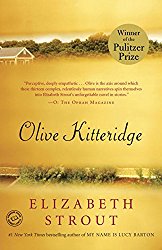
When I was in writing school years ago, I had an experience I frequently recount, wherein Elizabeth Strout, the Pulitzer Prize–winning author of Olive Kitteridge, taught me more in a 10-minute workshop introduction than I had learned in all the many writing seminars and workshops I had had up to that day. In that 10 minutes, Strout imparted on us, among other things, the importance of positioning and authority, and the notion that we writers need to take our readers by the hand and gently but confidently lead them through our stories. I recalled that day again recently when Strout gave me a bit of advice on a piece of writing I’d long ago considered completed and buttoned up. After reading the Prologue to my unpublished first novel, wherein my protagonist and his wife are introduced to the reader, Strout told me I needed to “…let us know right away, or pretty soon, how old this man is, how old is wife is…without using numbers.” This would, she said, “be helpful in positioning the reader.”

No one who has studied with Strout will be surprised by that advice, and in fact my only surprise was that I needed it at all, because I really should have known better. But no matter, I was hugely grateful for the guidance, and so I set about filling in the gap. I just needed to figure out how, and that search led me to some discoveries I thought would interest my fellow writers. It was my wife Caroline who wisely suggested that I look at Strout’s own books to see how she addressed the problem, and so here, book by book, are the solutions I discovered: 


http://www.indiebound.org/book/9780375705199
As the title implies, this is the story of two women, a mother and a daughter. Strout is therefore able to use this relationship to tell how old both characters are in one swoop. After a lengthy description of Isabelle—which, of course, contains its own clues about her age—we get the simple phrase, “…her daughter, Amy, a girl of sixteen…” Obviously, Strout chooses to use a number here, but this is unobtrusive because of the character’s formative age and the fact that we are so well positioned in the lives of both characters with this one piece of solid information that we are easily able to retain that positioning throughout the story.


http://www.indiebound.org/book/9780812971828
The parent-child relationship is also key to establishing the age of the Reverend Tyler Caskey, the protagonist of Abide with Me. Strout accomplishes this gradually, just as she does with Isabelle, but the first clues come in the very first sentence: “Oh, it would be years ago now, but at one time a minister lived with his small daughter in a town up north near the Sabbanock River,…” Here we see that the age of the characters is just one element of positioning the reader, and that timing (“years ago now”) and setting (“a town up north”) are also important. We also see that working them in together is where the artistry comes in, that doing so with the right amount of grace and subtlety accomplishes a purely practical objective in a way that, again, takes the reader by the hand.


http://www.indiebound.org/book/9781400062089
In this, Strout’s Pulitzer Prize winner, a book that has subsequently been made into an HBO mini-series produced by and starring Frances McDourmand, the reader is positioned at the beginning, but then must be repositioned many times as the book goes on. This is because Olive Kitteridge isn’t a novel in the pure sense, but rather a collection of stories and vignettes, all taking place at different points in the lives of the characters, Olive and Henry Kitteridge. In many cases, in fact, Olive and Henry are off to the side, observers.

http://a.co/gT9HHWjBecause Olive and Henry are old at the outset, Strout is able to use their stage of life to establish age, which she does, again, starting with the very first sentence. “For many years,” she writes, “Henry Kitteridge was a pharmacist in the next town over,…” Again weaving in setting and timeframe, she continues in the next sentence, “Retired now, he still wakes early and remembers how mornings used to be his favorite,…” Because Olive is married to Henry, the reader will naturally assume that she is of a similar age, and only needs to be informed otherwise if their ages are far apart, which they aren’t.

Having anchored the reader in one point in time, Strout moves on to other timeframes and new protagonists, always being careful to reposition the reader as needed.

Patty Howe, a protagonist in the second chapter, “Incoming Tide,” is first positioned by her occupation, a waitress in a coffee shop, and is then set as a young wife who has recently miscarried by her reaction to newly baked muffins: “The fact that their newly baked scent did not touch off a queasiness in her, as they had two times in the past year, made her sad: a soft dismalness settled over her.”

Angie O’Meara, the protagonist in the third chapter, “The Piano Player,” is set as a lounge singer of middle age at the end of the first paragraph, “…the townspeople of Crosby, Maine, had for many years now taken into their lives the cocktail music and presence of Angie O’Meara.”
And so on. The unique structure of Olive Kitteridge makes it a veritable object lesson in positioning the reader, and in establishing age without numbers.


http://www.indiebound.org/book/9780812979510
The protagonists of this story, the brothers Jim and Bob Burgess and their sister Susan, are introduced in an opening scene wherein an old woman gossips with her daughter about current and former residents of their town, Shirley Falls. The tenor of the scene suggests a distant past and characters—despite their being referred to as “the Burgess kids”—of a reasonably mature age. But it is the reference to their life experience, which, of course, foreshadows the dramatic events of the story to come, that sets them firmly in middle age: “The Burgess kids had a hold on her, I think,” says the daughter of the old woman, “as a result of the fact that all three had suffered publicly.”


http://www.indiebound.org/book/9780812979527
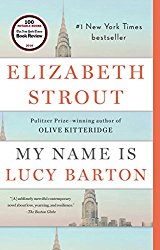
Positioning in this and all of Strout’s books is particularly important because her stories tend to wander widely to take in broad sweeps of time. This story is anchored in a 5-day period when the protagonist, Lucy Barton, was bedridden in the hospital and attended by her mother. As Lucy recalls this time, she remembers observing the world through her hospital room window: “I would stand and look out the window at the sidewalk below and watch the young women—my age—in their spring clothes,…” By mirroring Lucy against young professional women on a New York sidewalk, Strout firmly establishes her as a woman in her late twenties, and the reader is set in a firm position from which to experience the rest of the story, including Strout’s wanderings into distant places and timeframes.


And so, without revealing which approach I decided on—we’ll all have to wait for some visionary editor to finally buy my book for you to find that out—I can confidently say that a critically important and often unseen element in the best fiction is the very practical step of positioning the reader firmly in the story. So, whether you use relationships, stage of life, occupation, life experience, mirroring, or, as is typical and most effective, some combination of these devices, it is absolutely key that you establish the ages of your characters at the outset. Furthermore, the best writers know that simply using numbers to tell the reader, and then expecting them to remember that for the rest of the story, just isn’t enough. The timeframe, the setting, the antagonists and minor characters, and all the other elements of the story need to work together to reinforce who the characters are and, most importantly, what matters to them. Because readers won’t care about your characters until they know what the characters want, and we all want different things at different stages of our lives.

Thursday, May 8, 2014

Results, Not Causes

Reflections on John Steinbeck and The Grapes of Wrath

I took a bit of a John Steinbeck sojourn last weekend, traveling to the Salinas to visit the National Steinbeck Center museum, reading much about John Steinbeck’s life and career, and then retiring to our family cabin at Arroyo Seco for a brief and much needed writing retreat. I am also 200 or so pages into The Grapes of Wrath, the only Steinbeck I will have really read beyond the much shorter and more easily digested Of Mice and Men. On my trip, I learned for the first time (or perhaps had just forgotten) the degree to which Steinbeck was vilified not only for his politics, as encapsulated so clearly in The Grapes of Wrath, but also for the way he allowed these views to hijack his writing. Oklahoma state and Kern County officials protested loudly, as did many reviewers, against the content of The Grapes of Wrath, and critics the world over lambasted the Nobel Committee for granting Steinbeck the Nobel Prize in 1962. Such was the impact on the author that he never published another word of fiction in his life after 1962. (He died in 1968 at the age of 66.)

National Steinbeck Center, Salinas, CA
Steinbeck was obviously a great writer. One critic astutely observed that the Nobel Committee needed Steinbeck in 1962 much more than he needed them. In fact, asked the day after the prize was awarded whether he deserved it, Steinbeck himself answered, “Well, no.” But looking at the since released Nobel records showing who he was up against, you’ll come upon the names of four authors of the time you have likely never heard of, and most certainly have never heard from since. Steinbeck, in contrast, has been thrust in front of every high school and college certainly in the western states for decades and is the subject of the only museum in America dedicated to a single author.

Steinbeck is also a Northern Californian, a native son born in Salinas who set most of his work in and around the Monterey Bay Area. As such, I have an impulse to leap to his defense, particularly given that the world did experience the Great Depression, that the forces of commerce were largely responsible for it, and that social and government action were needed at the time, and were, in retrospect, incredibly successful. However, reading the pages of The Grapes of Wrath, I have to admit that the critics who have accused Steinbeck of crossing over from writing into preaching do have a point. Take for instance this passage from page 194 of my 1976 Penguin paperback edition:
One man, one family driven from the land; this rusty car creaking along the highway to the west. I lost my land, a single tractor took my land. I am alone and I am bewildered. And in the night one family camps in a ditch and another family pulls in and the tents come out. The two men squat on their hams and the women and children listen. Here is the node, you who hate change and fear revolution….This is the beginning—from “I” to “we.

If you who own the things people must have could understand this, you might preserve yourself. If you could separate causes from results; if you could know that Paine, Marx, Jefferson, Lenin, were results, not causes, you might survive. But that you cannot know. For the quality of owning freezes you forever into “I,” and cuts you off forever from the “we.”
I’d be surprised if one could find a clearer or more urgent call to collective action published anywhere in the world in the 1930s. Setting aside the fact that The Grapes of Wrath was such a wildly successful book, and that it was published at the height of both fascism in Europe and communism in Russia, the simple and observable fact is, Steinbeck is preaching an idea here. I personally believe it’s an idea that is not the sole purview of communism or socialism but can in fact be compatible with American capitalism, but that’s not the point. The point is, the fiction writer is most certainly becoming the social critic here, stepping outside the story to make a point—in fact, to preach a point. As great a writer as he was, the critics who accuse him of this have a leg on which to stand.

So what does all this mean to writers writing, as Steinbeck did, about work, family, and society in a time of tumultuous change—writers doing so, but doing so today, in a very different time?

The first thing to realize, of course, is that The Grapes of Wrath was written in a time of superlatives, a time when deprivation was so widespread that extremes could be convincingly portrayed in the black-and-white terms of good and evil. The work of a writer like Steinbeck, with its sermons and wistful descriptions of the great unwashed innocents, could find and sate an audience in 1930s America. Today, society’s trials are different. We live in a time of relative plenty, the country is populated largely with knowledge workers, not laborers, and the conflicts that touch our work lives—and thus our families and our society as a whole—are anything but superlative. They are subtle and confusing, offering no black-and-white, but only gray. Our characters, typically, will not be the downtrodden Joads of Oklahoma. In my case, in fact, since I was born in Silicon Valley and have lived here my entire life, I am often writing about characters who are the lucky ones, human beings placed by circumstance and personal initiative into the center of an aberration of good fortune. The question for characters like these is not, how does a man respond when pushed to the brink? The question is, how does a human being respond when the brass ring is there, but sacrifices must be made? An offering must be made, a series of choices, and it is in those choices, with all their complexities and hidden, even invisible elements, that the story lies.

Furthermore, The Grapes of Wrath was written in a time when American literature was accepting of sentimentality and melodrama—I think of them as the “pre-Salinger years”—when an author could simply write this about a character:
He had never been angry in his life. He looked in wonder at angry people, wonder and uneasiness, as normal people look at the insane.
It was a time before the great burden of ambiguity was heaped onto the shoulders of serious American writers by authors like Bellow and Updike, Carver and Cheever, Dee and Strout. Writing in a simpler time makes for simpler writing, and Steinbeck’s career is a good example of that, but you also have to recognize that this point in the endless drama where we 21st century writers have walked onto the stage also presents some great advantages. A fiction that needs ambiguity is a good fiction for the subtle and complex dramas of our complicated world. We are freed from portraying good guys and bad guys, and while we still need to create the tension that for millennia came from binary narratives of good vs. evil, we can place much of that work onto the reader: we can create active engagements with the characters, occasions to understand what’s going on (with little effort if we’re successful), and then choose a side and begin rooting (with much effort if we’re successful). A string of these dramas does not need to lead the reader to a political position, it just needs to lead them to a deeper understanding both of the particular drama we are portraying and similar dramas that unfold all over the world every day, and in the life experiences of everyone. A breach in the family occurs at the end of The Grapes of Wrath, and there will often be breaches at the ends of our stories as well. But these breaches will not be sentimental and melodramatic endings to small stories with torches to carry. They will be common—almost universal—endings to stories that could happen at any time: today, tomorrow, and every day thereafter.

Tuesday, June 17, 2008

Andrew Sean Greer on Transport and Grandmothers

Fred Leebron, one of my favorite writing teachers at Queens University of Charlotte, talks sometimes about the idea of transport in fiction writing. Now I often don’t know what the hell Fred is talking about, but I love him anyway because his passion for the craft is infectious. As for this transport thing, you may know very well what it is, and if so, good on ya, but I’ve had to struggle with it a bit—until now.

In Andrew Sean Greer’s novel The Confessions of Max Tivoli, I have discovered an author who masterfully and relentlessly transports us through time, space, emotion, and consciousness while at the same time keeping us firmly anchored in the story, and more specifically, in the scene, the interaction, the emotion he wants us to see and feel. He keeps us right where he wants us, but takes us everywhere at the same time.

Being the incorrigible suck-up that I am, I told Greer this (well, not all of it, but the gist of it anyway) when he appeared at Booksmith in the Haight last Thursday night. The following is an excerpt from the reading he did that night, which was from his new novel, The Story of a Marriage. The setting is San Francisco, 1953, and in this scene, the first-person protagonist, Pearl Cook, is in the backyard chatting with Buzz, an old army buddy of her husband, Holland. Pearl and Holland have a son they call Sonny, who is sickly, and a dog named Lyle. Buzz is helping Pearl hang out the laundry, and he has just called her attention to his nose, which has obviously been broken before.

I nodded. “It’s a beauty.”

“Thank you.”

“How did you get it?”

“Holland.”

The sun flashed across the billowing sheets. I blinked, turned toward Buzz, and saw him raising a hand to his face just as the sunlight stained him white all along his arm.

“Holland hit you?”

Buzz just cocked his head and watched me. Holland never raised his voice except at the radio, never hit a thing except the couch pillows before he sat down, grinning, with his cigarette. But once, of course, he’d been a different man, a man trained to shoot other men during the war, who drank, who sang with soldiers and hit a friend across the nose.

At last I asked, “Was it over a woman?”

He handed me a pair of trousers. “Yes.”

I pulled out the trouser dryer and began to stretch the pants onto it. “Tell me.”

“Pearlie,” he said. “We were born at a bad time.”

“I don’t know what you mean. It’s a fine time.”

I didn’t know what he meant by “we.” I couldn’t imagine what might bind me together with a man like Buzz, as likable as he was. I couldn’t draw any kind of line around the two of us.

“You’re proud of your house. You have a nice touch.”

“It belongs to Holland’s family.”

“It can’t be cheap,” he said to me. “I mean Sonny being sick and all.”

“Holland’s aunts help out. With the bills, the braces, it is a lot. It keeps me inside a good deal, I tell you, taking care of him,” I said without thinking. “Of course it’s no trouble,” I added hastily.

“Now what would you do if you had all the money you needed?”

I had no answer to that. It was a thoughtless question to ask a poor woman with a sick son, something only a rich man would ask. Like wondering aloud to a freshly brokenhearted girl: “What if it turns out he loved you after all?” It was something I had never allowed myself to think about. What would I have done? I’d have moved my family away from a house like that, with glaring neighbors, and stains on the basement walls from the ocean creeping in, with crickets sifting in under the doorsills with the sand…to Egypt, to Mali, to some fantasy destination I only knew from books. My God, I’d have flown to Mars with Holland and Sonny and never come back. That was the only answer I could think of. A woman like me, I couldn’t afford to name my real desires. I couldn’t even afford to know them.

All I said was, “I’ve got everything I need. I’m happy.”

“I know, but just imagine…where would you live?”

“This house is better than anything my parents had.”

“But just say…an apartment high above the city? A cliff over an ocean, with a view from your bed? Five hundred acres with a fence all around?”

“What would I do with five hundred acres?” I said without thinking.

Then he looked right at me, not a shy man at all, and I think for a moment I understood.

I stood there, staring at him, with the metal dryer contraption in my hand and the damp trousers over my arm. The sun came in full and lit the world from top to bottom; you could almost hear the jasmine reaching up for it. Then we heard the sound of Holland’s car returning and Buzz turned away.

In a moment, Holland shouted “Hey there!” from the house. I heard a bicycle bell, and Sonny heading down the hall in pursuit of love.

And Buzz said nothing else, touching his nose as if touching the memory of pain. He was half to the sun, and the shadow of his ruined hand fell across his long face in the form of another, younger hand cradling his cheek. The wind burrowed into his hair like a living creature. I didn’t say a word to him as he went inside, just continued stretching the trousers in the sun to dry. And down I went—into the green deep, flecked with gold and draped with waving plants, endless, bottomless—and forgot what I had glimpsed. I was a careful woman, a good gardener, and I pruned away the doubt. But you know the heart: every night, it grows a thorn.

So after this reading, and after I mustered the cojones to raise my hand, I mentioned this idea of transport to Greer and told him his work had helped me to better understand what it meant. I pointed out that in the excerpt he had just read, we were taken to the war, where two friends had an altercation, to the couch, where Holland grins and whacks the pillows, to Mali, to Egypt, to Mars, to the hallway of the house, forward and backward in time, and through a huge range of emotions, but we were never taken out of that tense, powerful, revealing moment between Pearl and Buzz. I then asked him about the process: I asked if the story just came out of him that way (not mentioning that if he had answered “yes” to that, I would have hunted down a straight razor and slit my wrists), or if he focused on a particular dimension of the story for a time and then did multiple passes, interleaving the various dimensions into the final, complete whole…or what?

His answer, in essence, was that a story like this one, which is essentially about a housewife who rarely leaves her house, needs a broader dimension to hold the reader’s interest. He said he feels it’s his responsibility to give the reader that broader dimension, so when he revises, when he is adding metaphors to color in the lines, he looks to do it in a way that broadens the reach of the story—taking the reader, for instance, out of the backyard and all the way to Mars. In this particular case, the book is only 198 pages, so he said he felt that these wider glances and forays have added meat to the book, making it a more satisfying read in the end.

I know that I, for one, intend to find out for myself.

Greer on His Grandmothers – and Strong Women Everywhere

As mentioned above, The Story of a Marriage is a first-person tale narrated by a protagonist who is a housewife in San Francisco in 1953. In response to a question about his use of the first person, Greer explained that he used it because wanted to deeply explore the feelings of women who had strong personalities, but were constrained by the customs and social mores of the time. This idea grew out of his experiences with and memories of his own grandmothers, both of whom were strong women who must have had to live with these kinds of constraints. He told the story of one grandmother who, when she died, left behind a bottle of Vodka hidden in the flour canister, $5,000 in bills wrapped in tinfoil, a handgun hidden in the freezer, and a box of correspondence she had written—apparently without the family’s knowledge, or at least without it becoming general knowledge in the family—to every president who had sat during her adult life.

Not sure if it was the same grandmother, but he told another story that had to do with the time he came out as a gay man to his grandmother. (“Not her favorite subject,” he said.) Shortly after he had done this, the Atlanta Olympics were about to start, not far from his grandmother’s home in Greenville County, South Carolina. Learning that Greenville County had just passed a resolution declaring homosexuality "incompatible with the standards to which this community subscribes," Greer’s grandmother wrote a letter to the Olympic Committee protesting the fact that the Olympic torch was about to be run through the county. She pointed out that Olympic rules specified that the torch could not be run through any area that had laws violating basic human rights. The Olympic Committee took action, and the torch was shrouded in a van as it passed through Greenville County. (True story. Check it out: http://www.boston.com/news/local/articles/2003/10/05/in_south_episcopal_schism_pondered/)